


Industrial Drawer Slide - Side by Side SDS43S-1410 Full Extension, Slim Design, Stroke: 1446mm
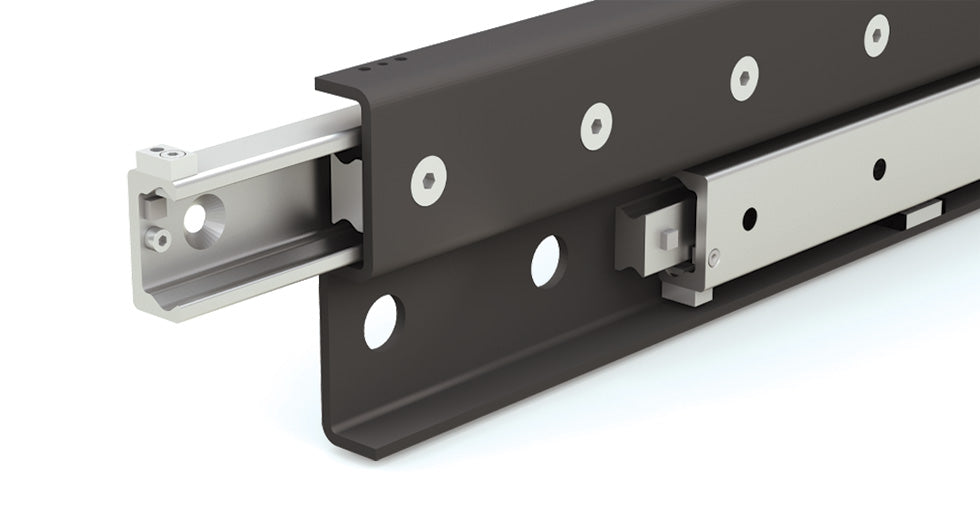
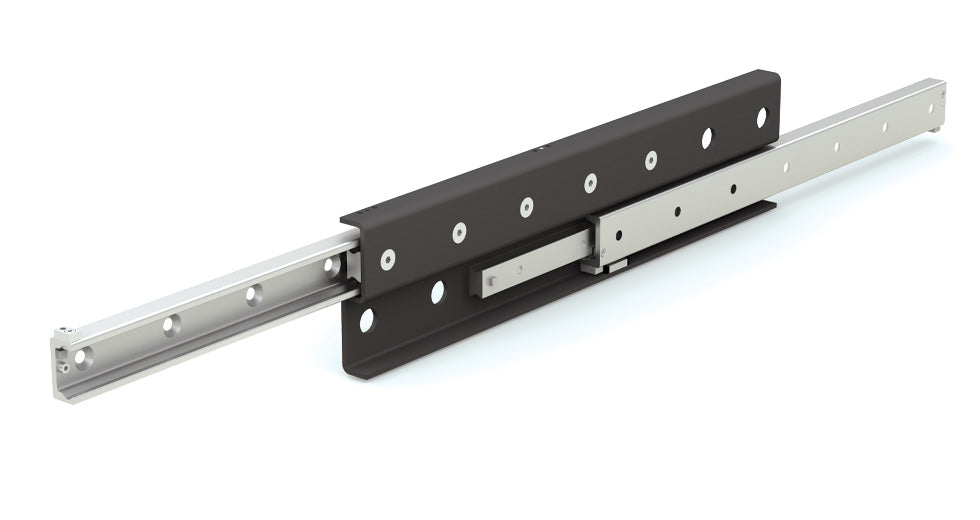
Full-extension drawer slide, heavy-duty steel, size 43 with a 1446mm maximum stroke, using a side-by-side S-Beam configuration and ball bearing linear guide action to support cantilevered loads from just one side in a narrow telescopic assembly. The slide is built from two zinc-plated hardened steel SDP rail components, each 43mm wide, arranged side by side to create an assembled profile only 28mm thick. One rail remains fixed while the other carries the moving tray, panel, bin, or service module. A precision ball cage travels between the rail surfaces for rigid, low-friction guidance. Unlike conventional drawer slides mounted on both sides of a cabinet or frame, the SDS layout supports heavy one-sided loads where installation width is limited.
- Nominal Width: 43mm
- Rail Length: 1,410 mm
- Max Stroke: 1,446 mm
- Max Static Load (Fy): 3,864 N
- Slide Direction: Single – use the configurator to select double direction
- Material: Hardened Steel (56.5–60.5 HRC)
- Finish: Zinc Plated Internal & External Rails with an E-Coated S-Beam
