

Lead Screw Linear Actuators – Captive, External & Non-Captive
Ways to Order


Lead Screw Linear Actuator LE238S-T10105-250-AR2-0-220 External Nut NEMA 23 Motor, Length: 250mm

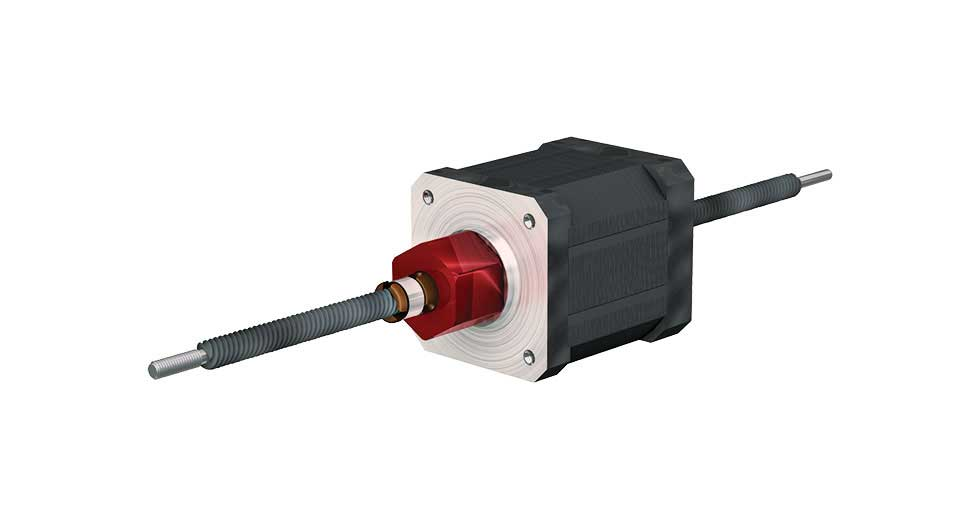
Lead Screw Linear Actuator - LSR0601T-0200-NCF141-NNN-NNN - Non-Captive NEMA14 Motor, Length: 200mm

Lead Screw Linear Actuator LE115S-T6503-150-AR0-0-100 External Nut NEMA 11 Motor, Length: 150mm

Lead Screw Linear Actuator LE141S-E06063-200-AR1-0-100 External Nut NEMA 14 Motor, Length: 200mm

Lead Screw Linear Actuator LE115S-T6503-50-AR0-0-100 External Nut NEMA 11 Motor, Length: 50mm

Lead Screw Linear Actuator LE174S-T0804-75-AR1-0-150 External Nut NEMA 17 Motor, Length: 75mm

Lead Screw Linear Actuator LE174S-T0804-250-AR1-0-150 External Nut NEMA 17 Motor, Length: 250mm


Lead Screw Linear Actuator LE141S-E06063-50-AR1-0-100 External Nut NEMA 14 Motor, Length: 50mm

Lead Screw Linear Actuator LE238S-T10105-400-AR2-0-220 External Nut NEMA 23 Motor, Length: 400mm


Lead screw linear actuators are motorized, programmable leadscrew assemblies that use a threaded lead screw and mating nut to convert rotary motor motion into controlled, precise and repeatable linear movement. Captive actuators keep the motor stationary while a non-rotating screw extends and retracts from the motor to move an attached load over a relatively short stroke. Non-captive actuators allow the screw to pass completely through the motor, supporting longer travel and flexible mounting because either the motor or the screw can become the moving output.
External-nut lead screw actuators use a third configuration in which the screw is integrated with the motor shaft and rotates without extending from or passing through the motor. The external nut is restrained from rotating, forcing it to travel axially along the screw and move the attached load. Although technically distinct from a captive actuator, the external-nut design is included in the captive subcategory because the motor and screw remain in a fixed assembly and the linear output follows a controlled path outside the motor rather than passing through it.
PBC Linear lead screw actuators combine precision-rolled, PTFE-coated 300 Series stainless steel screws with self-lubricating Frelon® PTFE-based polymer composite nuts to reduce friction and wear, resist coating flake-off, and support maintenance-free operation. Round, triangular, and rectangular lead screw nuts are available in standard and Constant Force Technology™ anti-backlash designs, allowing the nut shape and backlash-control method to be matched to the mounting and positioning requirements.
Available with NEMA 08, 11, 14, 17, and 23 hybrid stepper motors, these actuators provide programmable control of position, speed, timing, and direction for robotics, automation equipment, CNC machinery, medical devices, electronics manufacturing, and industrial positioning systems. Angular contact bearings support the lead screw, increase thrust capacity and durability, reduce runout, and minimize axial play, while optional Smart Motor Technology can provide up to 50% more torque to shorten cycle times and improve machine efficiency. Angular contact bearings support the lead screw, increase thrust capacity and durability, reduce runout, and minimize axial play, while optional Smart Motor Technology can provide up to 50% more torque to shorten cycle times and improve machine efficiency.
- Motorized leadscrew actuators convert rotary stepper motor motion into controlled linear movement
- Available in captive and non-captive actuator configurations
- Captive actuators use a non-rotating screw that extends and retracts from the motor
- Non-captive actuators allow the lead screw to pass completely through the motor for longer travel
- Precision-rolled, PTFE-coated 300 Series stainless steel lead screws
- Self-lubricating Frelon® PTFE-based polymer composite nuts
- Standard and Constant Force Technology™ anti-backlash nut options
- Constant preload helps reduce axial clearance and reversal error
- Available with NEMA 11, 14, 17, and 23 hybrid stepper motors
- Programmable control of position, speed, timing, and direction
- Angular contact bearings support the lead screw and increase thrust capacity
- Reduced friction, wear, runout, and axial play
- Maintenance-free operation with long-term positioning stability
- Optional Smart Motor Technology provides up to 50% more torque
- Suitable for robotics, automation equipment, CNC machinery, medical devices, electronics manufacturing, and industrial positioning systems
Frequently Asked Questions
What is the difference between external, captive, and non-captive lead screw actuators?
Do lead screw actuators require additional guidance?
Recently Viewed Products
- Choosing a selection results in a full page refresh.
- Opens in a new window.