Heavy Duty Linear Rail Guides

Heavy-Duty Linear Rail Guides - Hevi-Rail

Linear rails are track systems that guide sliding or rolling elements along a single axis, providing controlled linear motion while supporting loads. Linear rail systems include round shaft rails, profile rails, cam roller tracks, and gliding linear slides, with rail geometries including U-channel, I-channel, C-channel, and Gothic arch raceways.

PBC Linear Hevi-Rail® linear rails are heavy-duty cam roller tracks available in rugged U-channel and I-channel profiles for high-load, long-travel applications. Matching case-hardened steel cam rollers support high radial and axial loads while providing durable rolling contact for material handling, lifts, steel processing, heavy manufacturing, and other applications involving shock, vibration, and demanding operating conditions.

Hevi-Rail® provides a robust alternative to precision profile rail where load capacity, structural strength, long travel, and resistance to harsh operating conditions take priority over positioning accuracy. Interchangeable rails, rollers, and mounting components simplify system maintenance and component replacement, while clamp flanges are available on selected sizes to simplify installation without welding and subsequent straightening.

Available in 11 sizes with continuous linear rail lengths up to 6m, Hevi-Rail® systems reach family maximum static load ratings of 59.2kN radial and 18.5kN axial. Rail material and mounting options vary by size, with sand-blasted or lightly oiled finishes available. Sealed rollers help protect internal components, while proper raceway lubrication supports long service life under heavy loads.

More About Heavy-Duty Linear Rail Guides - Hevi-Rail

Ways to Order

Catalog Preview
Web Catalog Web Catalog Download PDF Download PDF Video Video Features Features
84 products
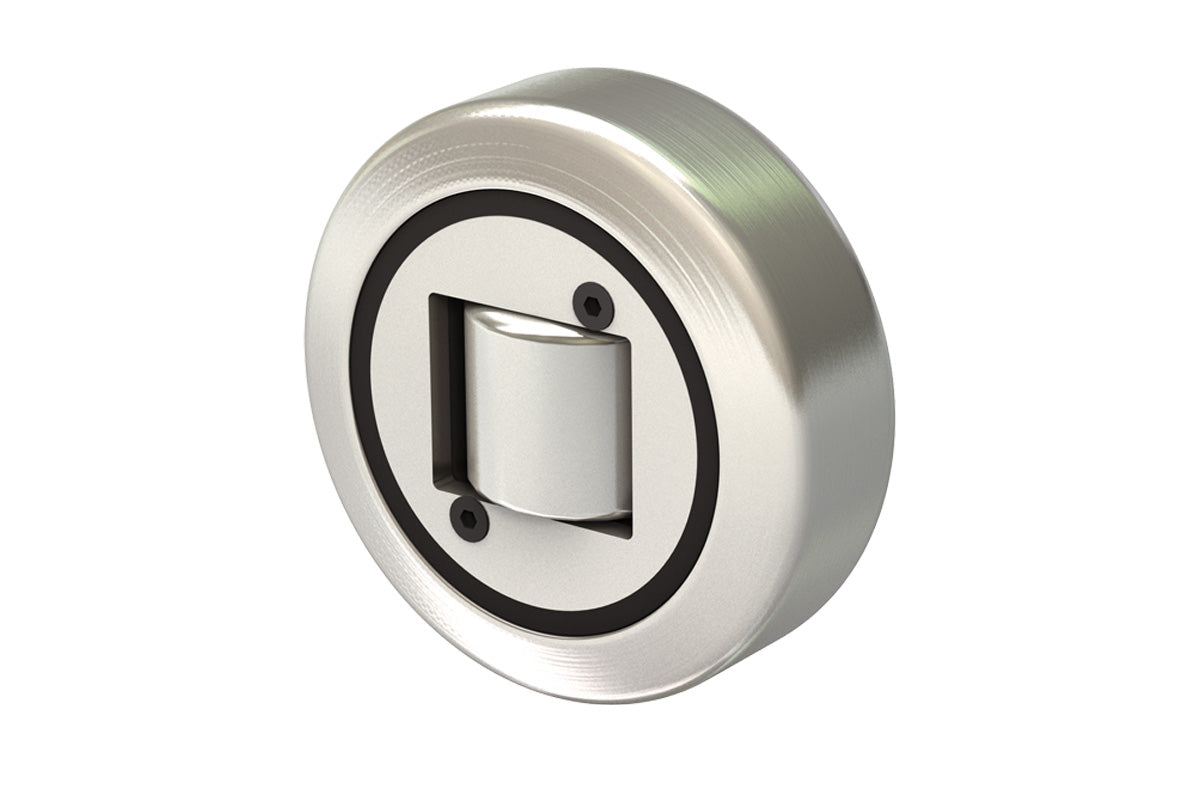
Fixed concentric heavy-duty linear guide roller for the HVR-4 U-channel. The 107.7mm OD combined roller carries both radial and axial loads and uses case-hardened S450J2 MOD carbon steel for durable service in demanding linear-motion applications. It can be paired with the adjustable HVBEA-461 roller in a two-rail system to remove..
$211.82
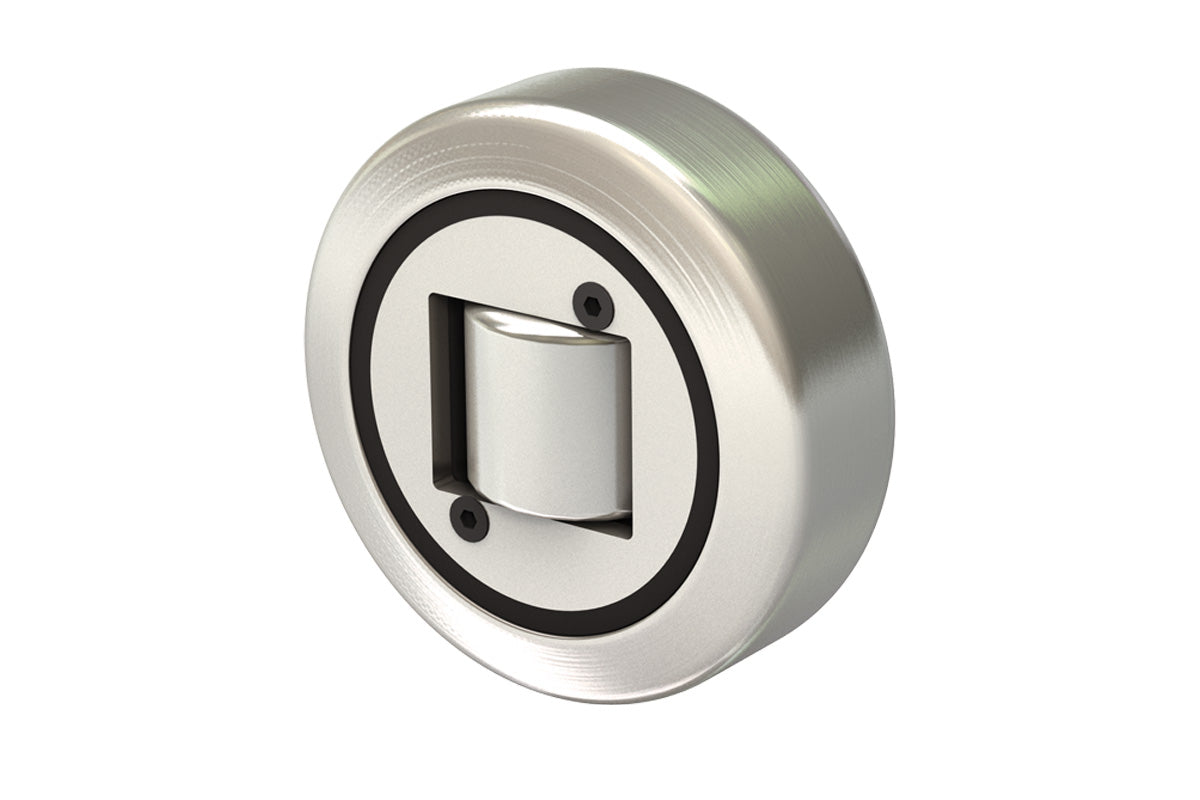
Fixed Heavy Duty Linear Roller Bearing with a 107.7mm diameter, part of the Hevi-Rail Linear Guide system, designed to handle substantial axial and radial loads. Compatible with the Hevi-Rail Linear Rail HVRI-11 I-Type (sold separately). The roller bearing is crafted from case-hardened S450J2 MOD. carbon steel, offering durability, while easily..
$190.84
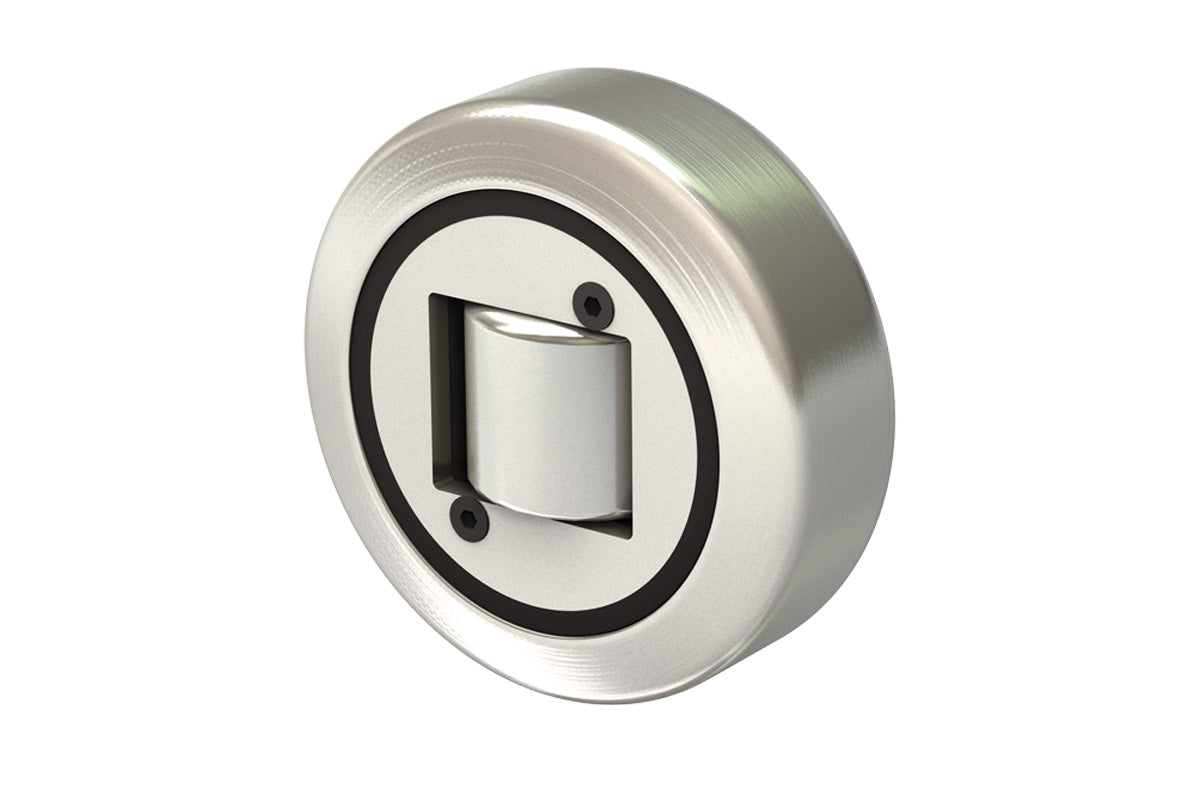
Fixed Heavy Duty Linear Roller Bearing with a 77.7mm diameter, part of the Hevi-Rail Linear Guide system, designed to handle substantial axial and radial loads. Compatible with the Hevi-Rail Linear Rail HVRI-08 I-Type (sold separately). The roller bearing is crafted from case-hardened S450J2 MOD. carbon steel, offering durability, while easily..
$146.10
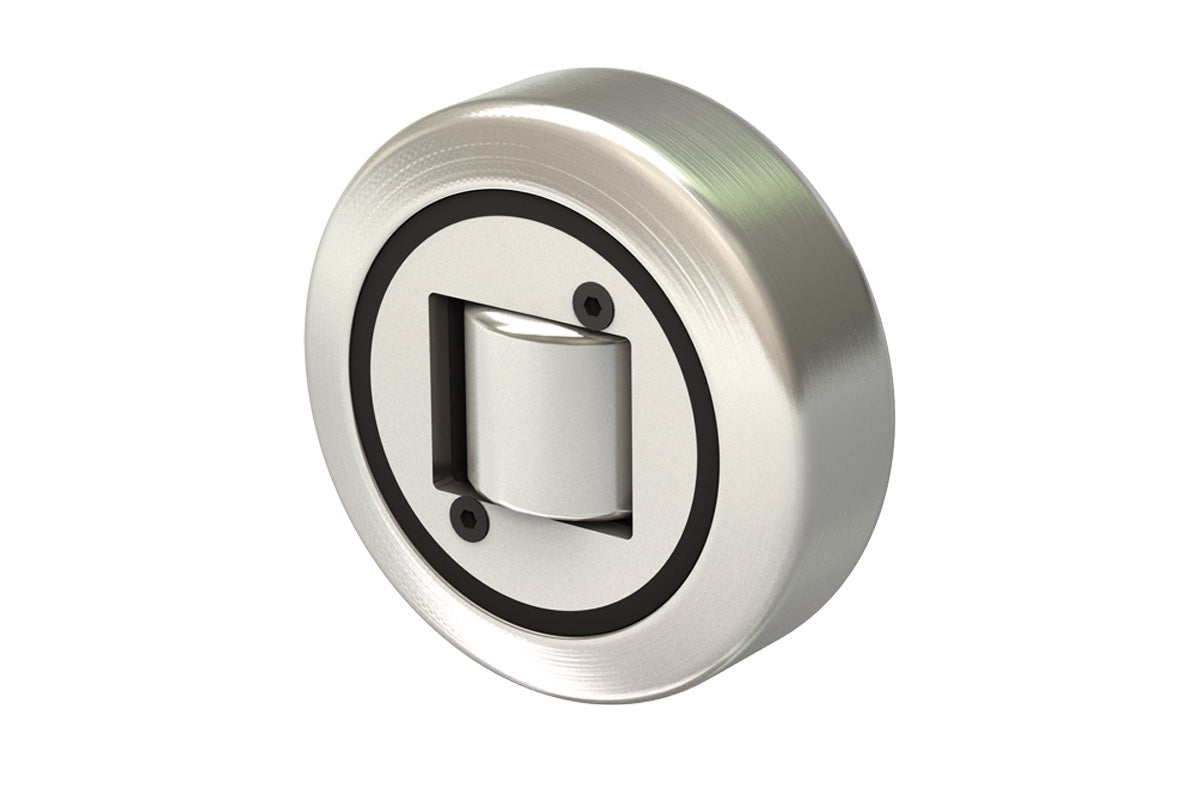
Fixed Heavy Duty Linear Roller Bearing with a 88.4mm diameter, part of the Hevi-Rail Linear Guide system, designed to handle substantial axial and radial loads. Compatible with the Hevi-Rail Linear Rail HVR-3 U-Type or HVRI-09 I-Type. The roller bearing is crafted from case-hardened S450J2 MOD. carbon steel, offering durability, while..
$163.47
84 products

Heavy-Duty Linear Rail Guides - Hevi-Rail

84 products

Linear rails are track systems that guide sliding or rolling elements along a single axis, providing controlled linear motion while supporting loads. Linear rail systems include round shaft rails, profile rails, cam roller tracks, and gliding linear slides, with rail geometries including U-channel, I-channel, C-channel, and Gothic arch raceways.

PBC Linear Hevi-Rail® linear rails are heavy-duty cam roller tracks available in rugged U-channel and I-channel profiles for high-load, long-travel applications. Matching case-hardened steel cam rollers support high radial and axial loads while providing durable rolling contact for material handling, lifts, steel processing, heavy manufacturing, and other applications involving shock, vibration, and demanding operating conditions.

Hevi-Rail® provides a robust alternative to precision profile rail where load capacity, structural strength, long travel, and resistance to harsh operating conditions take priority over positioning accuracy. Interchangeable rails, rollers, and mounting components simplify system maintenance and component replacement, while clamp flanges are available on selected sizes to simplify installation without welding and subsequent straightening.

Available in 11 sizes with continuous linear rail lengths up to 6m, Hevi-Rail® systems reach family maximum static load ratings of 59.2kN radial and 18.5kN axial. Rail material and mounting options vary by size, with sand-blasted or lightly oiled finishes available. Sealed rollers help protect internal components, while proper raceway lubrication supports long service life under heavy loads.


  • Heavy-duty linear rails for controlled single-axis motion under high loads
  • Made from durable S450J2 carbon steel
  • Available in rugged U-channel and I-channel/I-beam rail profiles
  • Case-hardened S450J2 MOD carbon steel cam roller outer rings
  • Designed to withstand high radial and axial loads
  • Supports axial loads up to 18.5 kN and radial loads up to 59.2 kN
  • Available in 11 sizes with continuous rail lengths up to 6 meters
  • Clamp flanges simplify installation without welding or straightening
  • Self-aligning design helps accommodate shock, vibration, and alignment variation
  • Sand-blasted finish options provide added corrosion resistance
  • Sealed, lubricated-for-life roller options help reduce maintenance
  • Suitable for aerospace lifts, steel processing, heavy manufacturing, and material handling

Frequently Asked Questions

What are Degrees of Freedom (DOF) in mechanics?
Degrees of Freedom (DOF) describe the number of independent ways a body can move in space. In mechanical systems, there are six main degrees of freedom: three translational (movement along the X, Y, and Z axes) and three rotational (rotation about those axes). Linear motion systems constrain these to allow controlled movement along one axis (desired path).
What types of linear rails are available?
Linear rails come in a variety of geometries depending on application needs, including U-channel, I-channel, C-channel, V-edge, and Gothic arch raceways. Each type is designed to support different load capacities, environments, and motion requirements.
What are linear rails used for?
Linear rails guide and support components moving along a controlled linear path. They are used in applications such as automation, material handling, machine tools, manufacturing equipment, aerospace systems, lifts, and other equipment requiring guided linear motion.
What is the difference between a linear rail and a linear guide?
A linear rail is the track or structural element that establishes the path of motion. A linear guide generally refers to the complete guiding system, which can include the linear rail together with bearings, rollers, carriages, or other moving components.
How do you choose a linear rail?
Linear rail selection depends on factors such as radial and axial load, travel length, speed, available mounting space, required rigidity, alignment, operating environment, and the type of bearing or roller used with the rail.
When are heavy-duty linear rails used?
Heavy-duty linear rails are used when an application requires greater load capacity, structural rigidity, shock resistance, or long-travel support than lighter linear guide systems can provide. Typical applications include steel processing, heavy manufacturing, material handling, industrial lifts, and large machinery.
What is the difference between U-channel and I-channel linear rails?
U-channel and I-channel linear rails use different structural profiles and mounting arrangements. The appropriate geometry depends on factors such as load direction, available installation space, structural support, roller arrangement, and machine design.
Can linear rails support both radial and axial loads?
Some linear rail and track roller systems are designed to support loads in both radial and axial directions. The allowable load depends on the rail geometry, roller configuration, size, mounting arrangement, and operating conditions.
How does alignment affect linear rail performance?
Poor alignment can increase rolling resistance, uneven loading, wear, and stress on linear rail components. Systems with self-aligning features can accommodate some installation variation while helping maintain consistent roller contact with the rail.
How long can linear rails be?
Available linear rail lengths depend on the rail system and manufacturer. PBC Linear Hevi-Rail® systems are available in continuous rail lengths up to 6 meters for long-travel applications.
Do linear rails require lubrication?
Lubrication requirements depend on the type of linear rail system and rolling elements. Some track roller systems use sealed, lubricated-for-life rollers that reduce routine maintenance and help protect internal bearing components from contamination.