
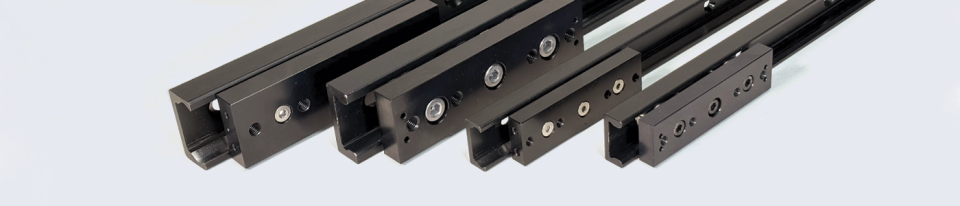
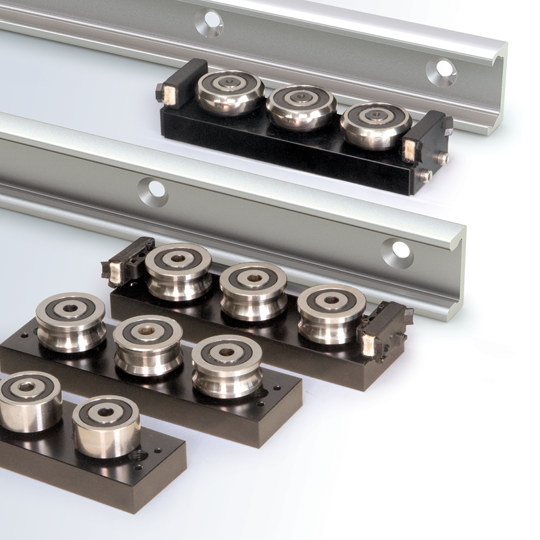
Steel Rail Standard

High Performance Solution for Linear Motion
Steel Rail Linear Guides from PBC Linear are the answer for when applications require durability and performance in a compact footprint. These linear guides are designed for high load capacity, smooth travel, and long life composed of solid steel rails and a precision-machined aluminum carriage assembly.
-
Variety of Roller Configurations: 3, 4, and 5 roller carriages available in several configurations for optimal load capacities and moment loads.
-
High Load Capacity: Supports loads up to 19,650 N.
-
Low Friction & Noise: Concentric and eccentric rollers provide quiet, fluid motion.
-
Wear-Resistant Construction: Cold-drawn steel rails are induction hardened for long life.
-
Mounting Flexibility: Counterbore and countersunk rail options.
-
Integrated Lubrication: Oil-soaked felt wipers keep the rails clean and lubricated.
-
Built-in Scraper Blade: Eliminates debris and contaminants from the rail surface.
-
Adjustable Preload: Tighten or loosen the preload to balance rigidity and smoothness for your specific application.
-
Design Compatibility: Fully interchangeable with other compact rail systems in the market.
Steel Rail Plus

Ideal Solution for Parallel Rail Misalignment
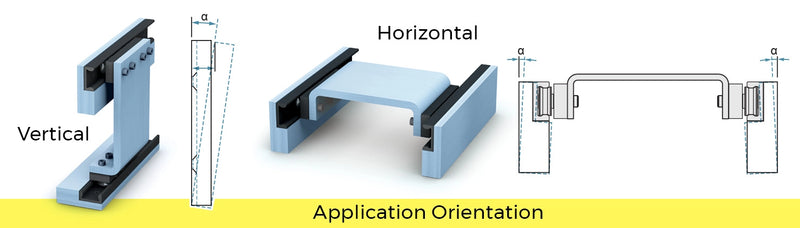
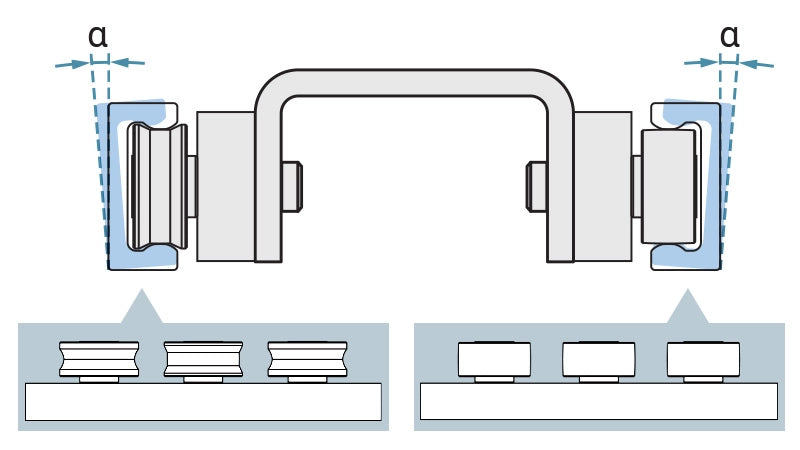
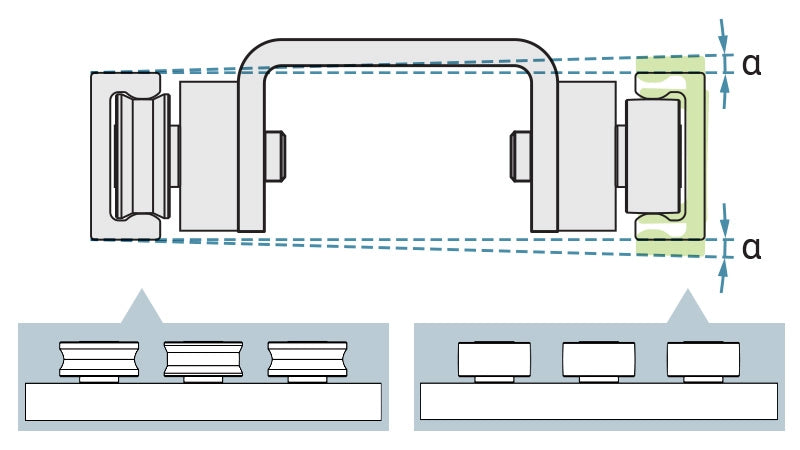
Applications requiring parallel rails often create issues with misalignment, especially when tolerances stack up across multiple components. The Steel Rail Plus from PBC Linear was developed to overcome this exact industry-wide issue. Designed with self-aligning capabilities, the Steel Rail Plus Series eliminates the binding, stress, and premature wear caused by uneven rails.
-
Three Carriage Types Provide Different Self-Alignment Capabilities:
- – Guiding Carriage: Fully constrains motion in all directions for one-sided precision.
- – Floating Carriage: Allows axial movement to compensate for parallel rail gaps.
- – Rotating Carriage: Supports slight angular misalignment with full radial load support.
-
Assortment of Roller Configurations: Carriages available with 3-6 rollers in several configurations for optimal load capacities and moment loads.
-
High Load Capacity: Supports loads up to 20,520 N.
-
Self-Aligning Systems: Perfect for applications with uneven surfaces.
-
Flexible Roller Design: Each carriage type uses a mix of concentric and eccentric rollers to handle specific load and motion challenges.
-
Wear-Resistant Rails: Cold-drawn steel rails are induction hardened for long life.
-
Mounting Flexibility: Counterbore and countersunk rail options.
How Steel Rail Plus Solves Issues of Parallel Rail Systems

Steel Rail Series vs Redi-Rail
| Rail Material | Carriage Material | No of Rollers | Load Capacity | Adjustable Preload | Misalignment Compensation | |
|---|---|---|---|---|---|---|
| Steel Rail Standard | Cold-drawn steel, induction hardened |
Aluminum | 3–5 | Up to 19,650 N | Yes | No |
| Steel Rail Plus | Cold-drawn steel, zinc plated |
Aluminum | 3–6 | Up to 20,520 N | Yes | Yes with floating & rotating carriage types |
| Redi-Rail | Aluminum with steel raceways |
Aluminum | 3–5 | Up to 15,300 N | Yes - patented side adjustable | No |
Application Examples
Cite This Page
Source:
PBC Linear -
“Steel Rail Linear Guides for High Loads and Self- Alignment”
https://pbclinear.com/blogs/blog/steel-linear-guides-for-high-loads-and-self-alignment
Last updated:
January 2026